
Why transitions create instability
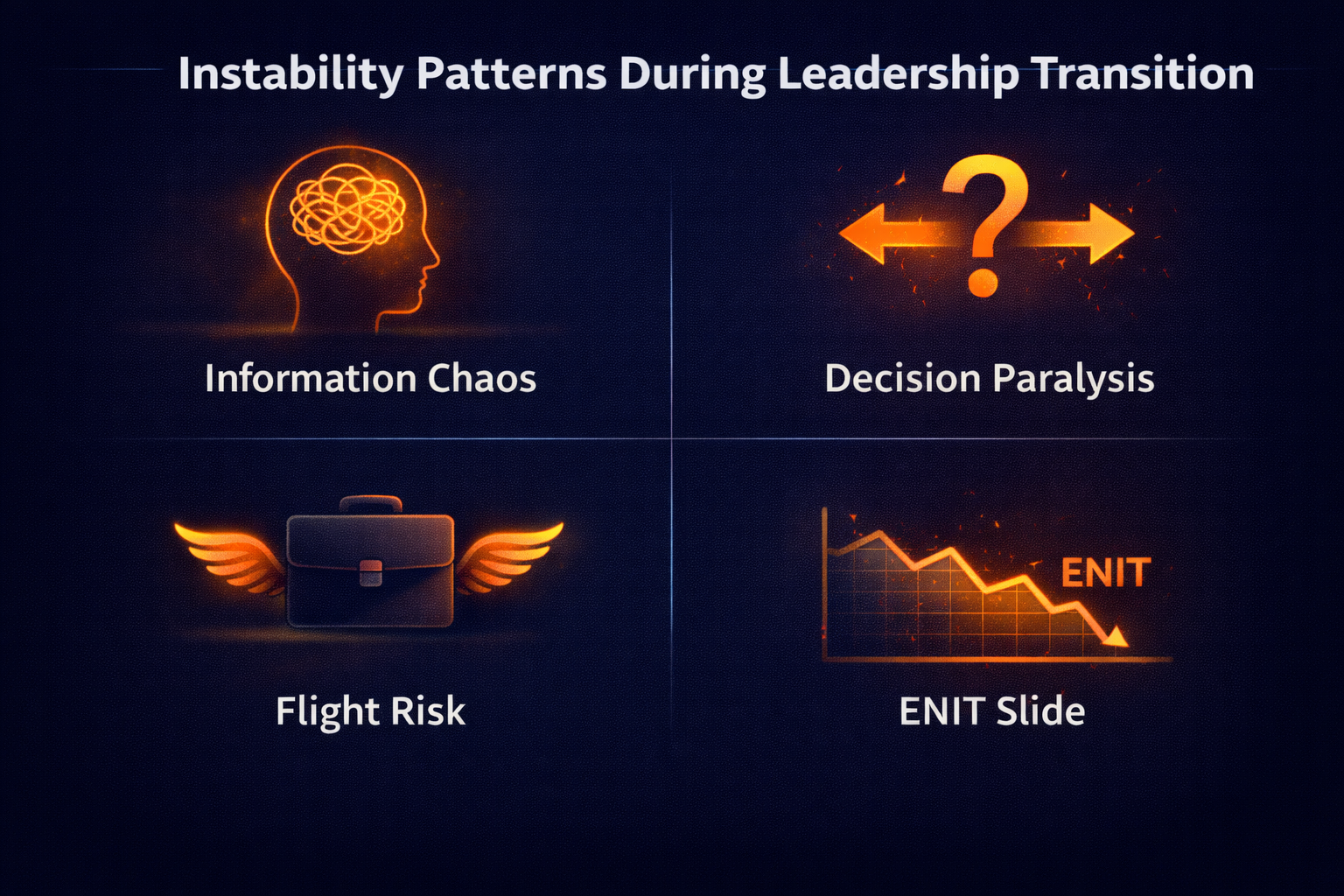
Transitions change more than leadership names. They change how decisions happen. Informal authority resets. Old escalation paths break. Teams slow down while they try to avoid making the wrong call.
Delivery stalls when organizations treat transition as a communication event instead of an operating model event. Stability comes from governance. Governance means decision rights, routines, and ownership that remain consistent while leaders change.
When governance stays ambiguous, teams compensate in predictable ways. They add approvals. They increase documentation. They defer decisions to meetings. These moves feel safe. They reduce output and increase cycle time.
Common breakdown patterns leaders should expect
- Initiative freeze. Work pauses until someone new approves it.
- Budget stall. Funding slows because authority is unclear.
- Vendor leverage loss. Renewals and negotiations happen late, under pressure.
- Parallel strategies. Multiple leaders drive competing priorities.
- Risk silence. Teams stop escalating issues because nobody knows who owns the decision.
You can prevent most of these failures by putting structure in place immediately. Do not wait for the new leader to settle in. The organization will drift while you wait.
The transition control model leaders can run
Transitions stay stable when leaders control three levers. Decision rights. Cadence. Ownership. If any lever is weak, you will see drift in delivery, risk, and spend.
Lever 1. Decision rights
Teams move faster when they know who decides. They move slower when they must guess. Decision rights must be explicit and current.
- Who approves priority changes and scope adds.
- Who approves spend changes and vendor renewals.
- Who accepts operational and security risk.
- What requires CEO or board escalation.
Lever 2. Operating cadence
Cadence protects execution. Transition without cadence becomes rumor-driven prioritization. Protect the routines that keep delivery predictable.
- Weekly executive steering. Risks, blockers, and decisions.
- Release rhythm. Predictable deployment windows and change review.
- Incident routine. Post-incident review, recurring root causes, and closure.
- Spend checks. Budget variance and forecast updates.
Lever 3. Ownership
Ownership prevents diffusion. Without named owners, committees form and vendors steer. Name owners for outcomes, platforms, initiatives, and risks.
- One accountable owner per critical initiative.
- One accountable owner per critical system or platform.
- One accountable owner per risk category, with action logs and due dates.
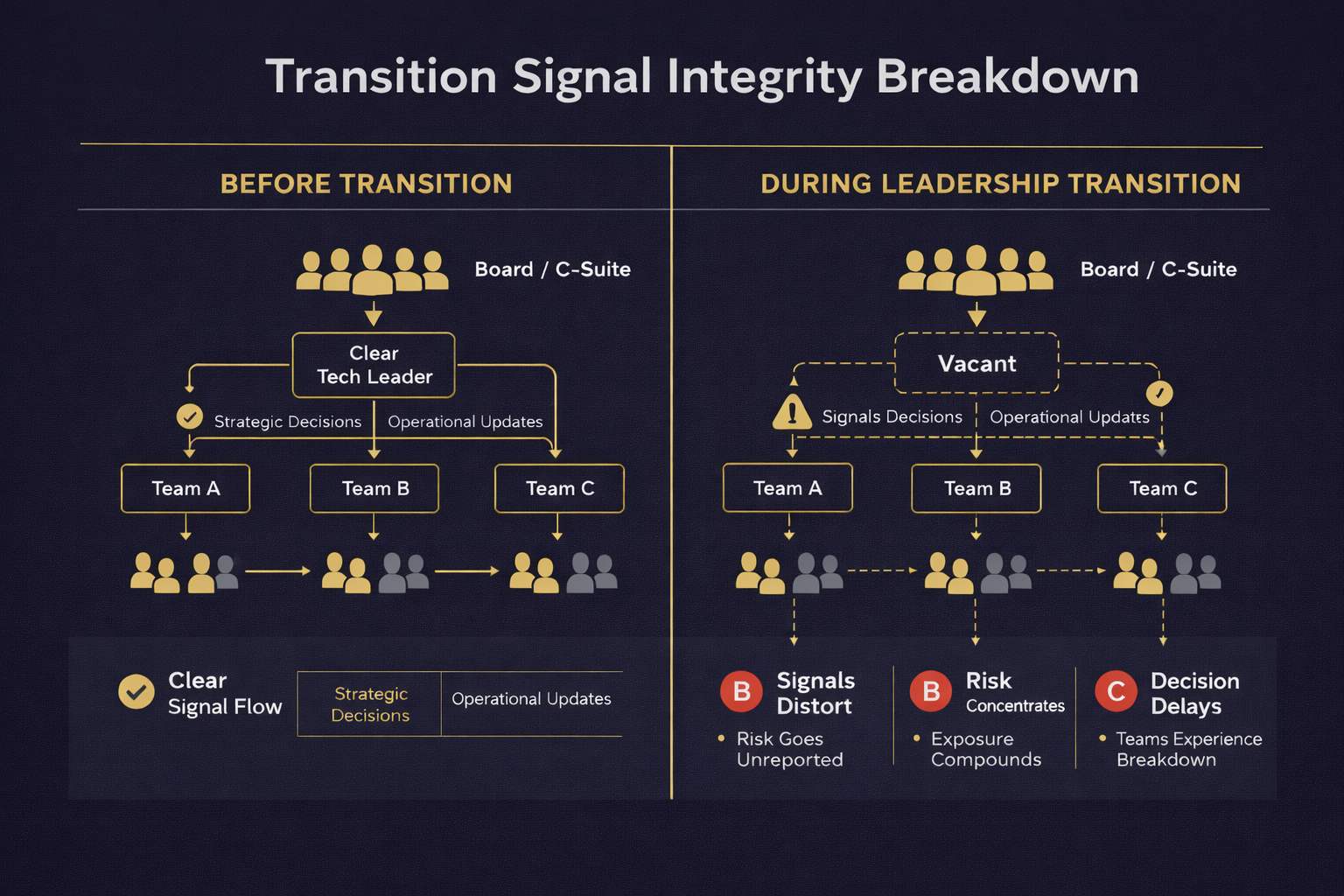
Signal integrity breakdown
Transition drift often starts with reporting. Status turns green to avoid conflict. Risks go unreported to avoid escalation. Owners become unclear. When leadership lacks signal integrity, decisions become reactive and late.
The fix is simple. Require answers in plain language with named owners and due dates. Track trend and closure rate, not activity.
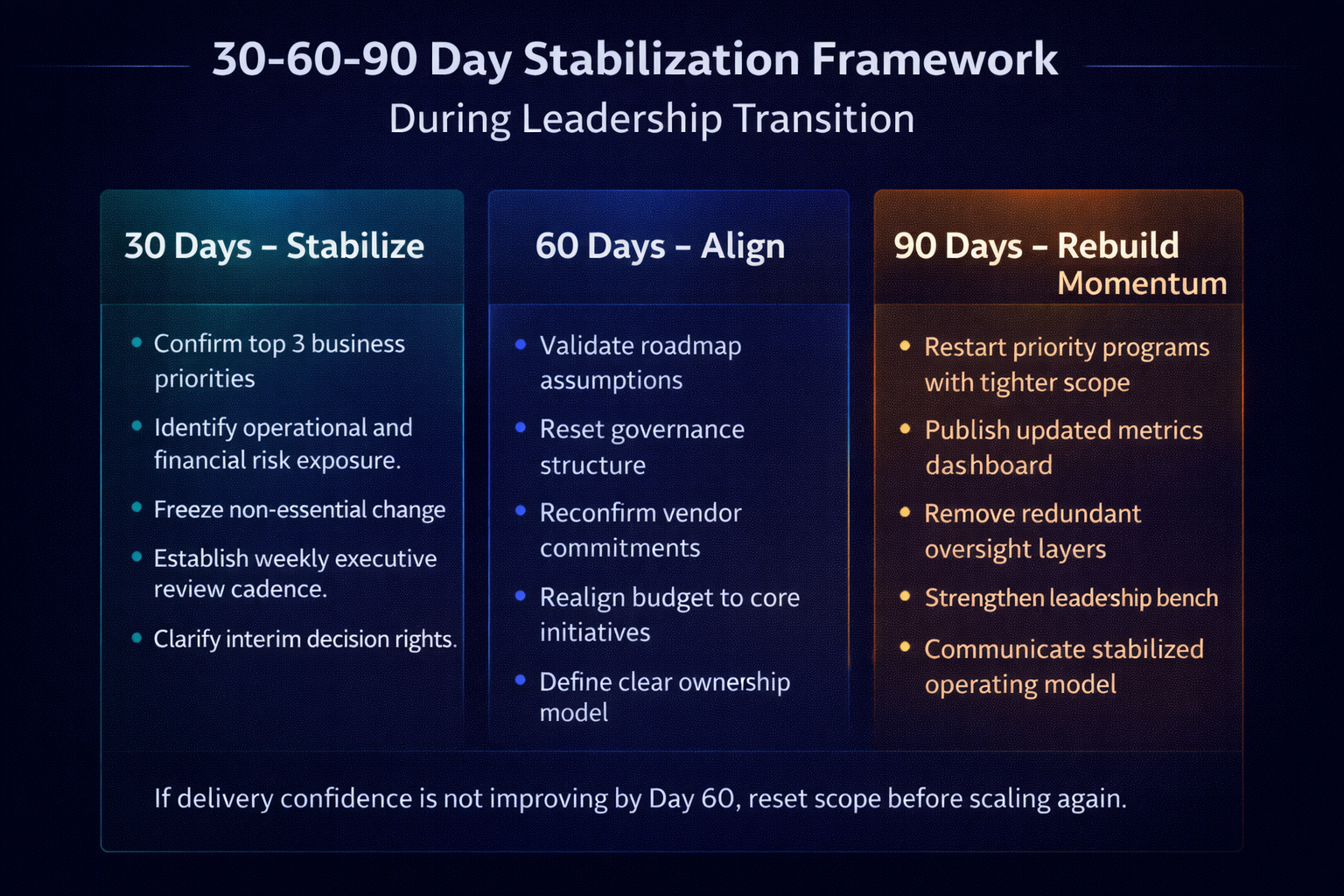
The 30-60-90 stabilization plan
Use a plan with specific governance actions. Avoid vague language. A transition plan succeeds when it restores speed and reduces risk within a quarter.
First 30 days. Contain risk and stop drift
- Publish decision rights. One page. Current names. Current thresholds.
- Freeze non-critical scope expansion. Protect capacity for stabilization work.
- Audit active initiatives. Confirm outcome, owner, timeline, and funding for each.
- Build a renewal pipeline. Identify renewals in the next 180 days and assign owners.
- Set a weekly steering meeting. Thirty minutes. Decisions, blockers, and risks only.
Days 31 to 60. Reset direction with constraints
- Confirm outcomes. Reduce to a small set leaders will defend.
- Make stop decisions. Pause low-value work to restore focus.
- Re-baseline metrics. Delivery, incidents, risk closure, and spend variance.
- Reconfirm vendor strategy. Consolidate overlap and prepare renegotiation positions early.
Days 61 to 90. Restore momentum and lock in routines
- Restart priority waves. Tie work to measurable proof milestones.
- Strengthen operating rhythm. Keep cadence stable across teams and leaders.
- Institutionalize ownership. Owners report in weekly steering and close actions.
- Publish a board-ready dashboard. Small set of metrics with trend and commentary.
This reset approach works best when it sits beside stronger first-90-days leadership discipline and a practical plan for resetting stalled initiatives before drift compounds.
Governance standard during transition
The goal is continuity. Leaders who protect cadence protect value. Keep governance light, consistent, and decision-ready.
Weekly executive steering agenda
- Top risks. What changed. Who owns it. What action closes it.
- Decision requests. What needs approval this week.
- Delivery stability. What slipped. Why. What will change.
- Incidents. Trend and top drivers. No deep technical debate.
- Spend signals. Variance alerts, renewal exposure, and scope adds.
Monthly operating review
- Budget variance and forecast by domain owner.
- Initiative health by outcome. Proof milestones and next decisions.
- Vendor scorecard for strategic vendors. Adoption, cost, risk posture, and renewal readiness.
Quarterly reset review
- Reconfirm outcomes and stop decisions.
- Review risk map and closure rate.
- Review renewal pipeline for the next two quarters.
- Approve the next wave only if stability holds.
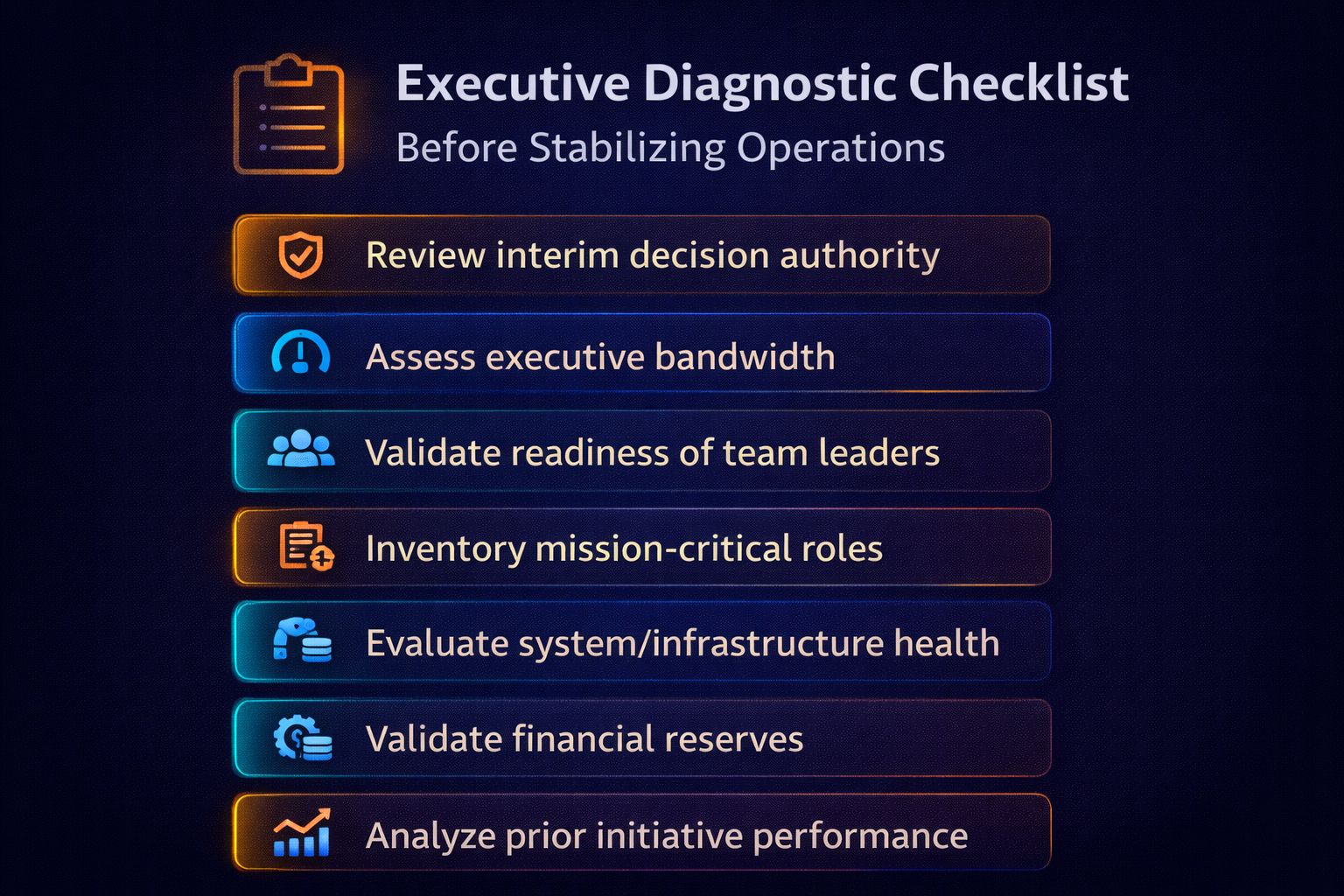
Executive diagnostic
Use this diagnostic before you accelerate new work. If answers are unclear, you are not ready to expand scope.
- Who has final decision authority today for priorities, spend, and risk acceptance.
- Which initiatives remain funded and why. Which ones are paused.
- What vendor contracts renew in the next 120 to 180 days.
- What metrics define stability for delivery, incidents, and cost variance.
- What has stopped moving. What decision is blocking it.
Board and CEO reporting during transition
Boards need confidence. They do not need technical detail. Your reporting should answer five questions every time.
- What outcome progress moved since last review.
- What risk changed, and what is the closure plan.
- What spend changed, and why.
- What vendor exposure exists in the next 180 days.
- What decision leadership must make this period.
If you cannot answer these cleanly, reduce scope and improve signal integrity before adding new initiatives.
Frequently Asked Questions
What should leaders stabilize first during a leadership transition?
Stabilize decision rights, operating cadence, and ownership for critical systems and initiatives. Publish who decides today, protect weekly execution routines, and assign single accountable owners for top risks, top initiatives, and top vendors.
How do you prevent delivery slowdown when leadership changes?
Freeze non-critical scope expansion, keep release and incident routines intact, and run a weekly executive review to clear blockers fast. Delivery slows when approvals become unclear and priorities shift weekly.
What metrics should boards and CEOs review during transition?
Track delivery predictability, incident trend, top risk closure rate, budget variance, and vendor renewal exposure. These signals show whether control is improving or drifting while leaders change.
How long does transition instability typically last?
Instability lasts as long as decision flow stays unclear. Many organizations improve within 30 to 45 days when decision rights, cadence, and ownership reset early. Drift can persist for quarters when governance stays ambiguous.
When should you use interim leadership during a transition?
Use interim coverage when decision load is high, delivery risk is rising, or strategic vendors and programs need clear executive ownership. Interim leadership protects cadence, stops vendor leverage loss, and keeps funding decisions from stalling.
Need structure during transition
A focused working session can stabilize decision flow, protect capital, and clarify operating authority within weeks. You leave with a transition control plan, named owners, and a cadence leaders can run.
Book a consultation