
What fractional CTO support is and what it is not
Fractional CTO support is senior technology leadership delivered part time. It is designed for executives who need stronger direction, sharper decisions, and visible progress without waiting months to hire.
- It is. A plug-in executive who sets direction, aligns teams, and drives execution across priorities.
- It is not. Staff augmentation, project coordination, or a vendor sales channel.
- It is. A leadership function focused on outcomes, risk, operating model, and delivery health.
Leaders usually reach for this model when the business already knows technology matters, but internal bandwidth or executive coverage is not strong enough to turn priorities into consistent execution.
When leaders should consider fractional CTO support
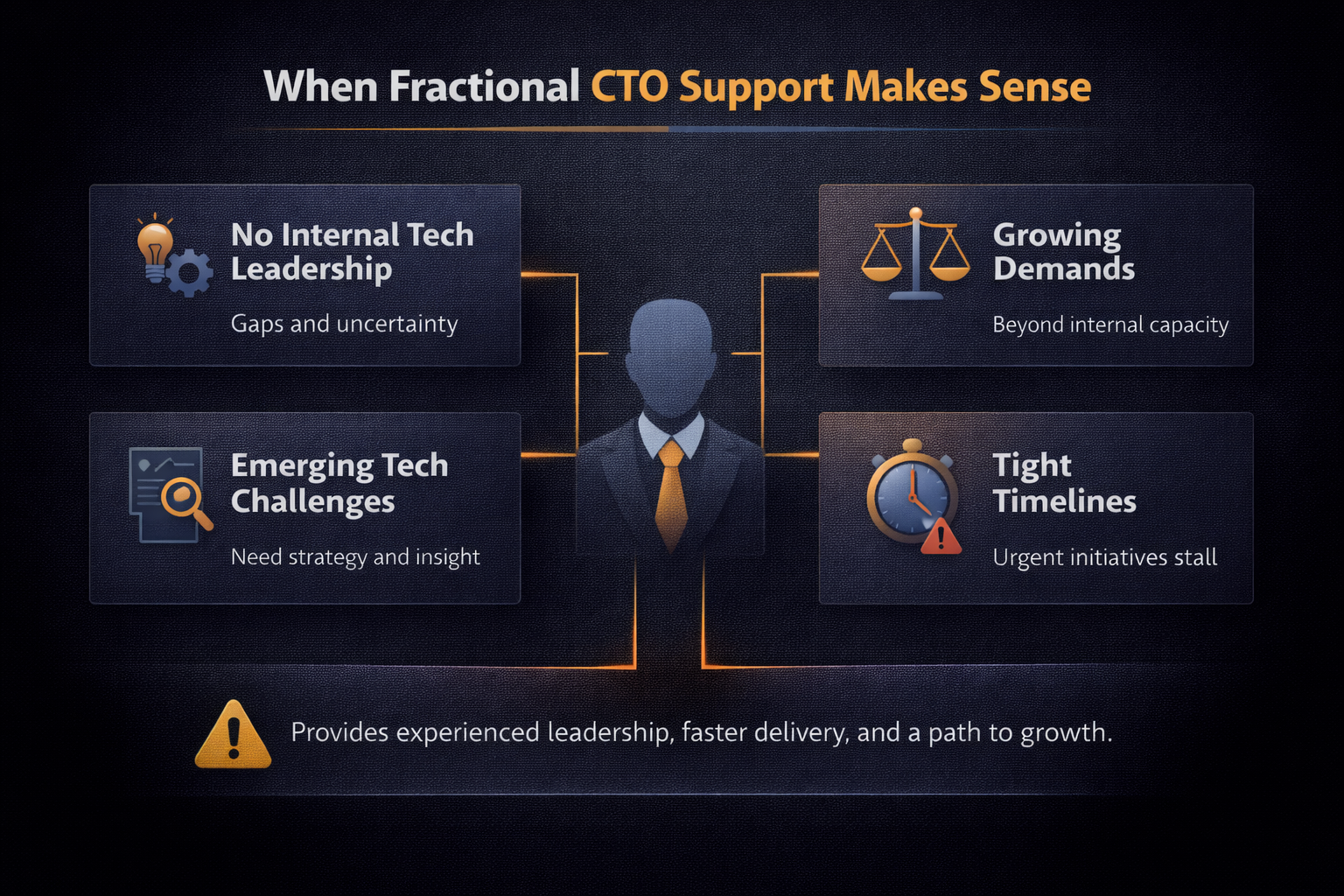
Many organizations wait too long. They try to solve leadership gaps with more tools, more meetings, or more project plans. Fractional CTO support is a better fit when the challenge is direction, ownership, and decision quality.
- Growth and scale. Revenue rises but systems, process maturity, and leadership routines lag behind.
- Delivery stalls. Teams stay busy but outcomes, timing, and accountability remain uneven.
- Risk exposure grows. Security, compliance, reliability, and vendor risk lack strong executive ownership.
- Decision fatigue spreads. Leadership spends too much time resolving technology tradeoffs one by one.
- Pre-hire bridge is needed. The business needs stability before bringing on a full time CTO.
What you should expect in the first 30 days
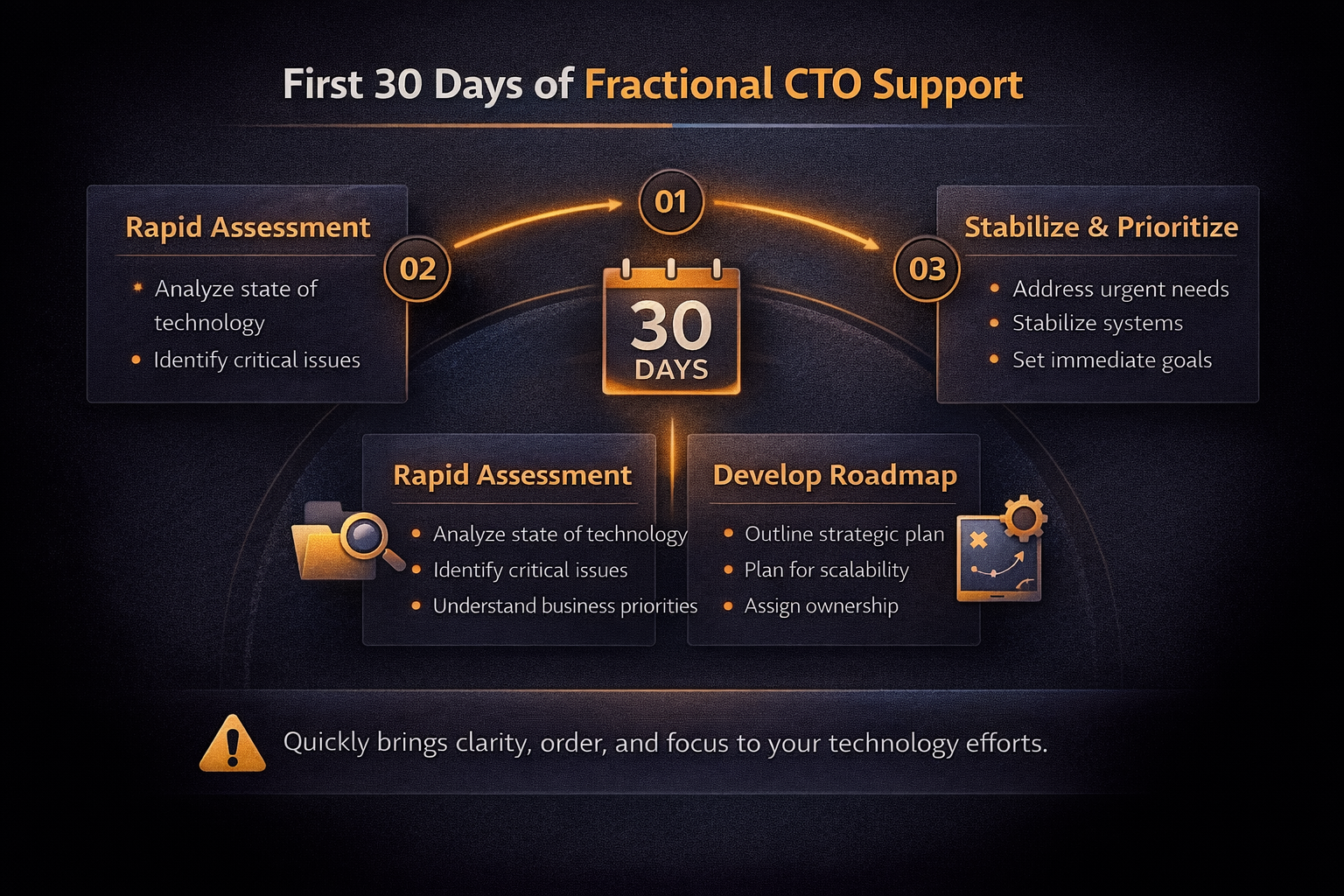
Strong engagements create clarity quickly. The first month should reduce ambiguity and produce a visible plan leadership can run. If the work remains vague after 30 days, the model is not being used correctly.
Week 1. Rapid intake and risk scan
- Review business priorities, active initiatives, and real operating constraints.
- Identify top delivery risks, dependency gaps, and operational bottlenecks.
- Confirm decision rights, escalation paths, and current leadership gaps.
Weeks 2 to 3. Focused assessment and alignment
- Technology and vendor landscape review.
- Delivery health across throughput, predictability, and quality.
- Security posture and the practical risks leaders address first.
- Operating model gaps across ownership, handoffs, and decision routines.
Week 4. A prioritized plan leaders can run
- A short list of outcomes for the next 90 days.
- A delivery plan with owners, milestones, and leading indicators.
- Stop decisions that protect focus and reduce noise.
- A governance cadence for weekly and monthly leadership reviews.
Engagement models that work
Fractional CTO work fails when the model is vague. Pick a model that matches the problem, the urgency, and the level of executive attention required.
Model 1. Advisory and executive decision support
- Best for leaders who need stronger decisions, better prioritization, and clearer governance.
- Focus on priorities, risk, spend, operating model, and leadership routines.
- Light footprint with high leverage.
Model 2. Delivery acceleration and modernization
- Best when delivery is stalled or technical debt blocks business outcomes.
- Focus on execution rhythm, platform ownership, and bottleneck removal.
- Creates momentum through shipped results and tighter leadership control.
Model 3. Interim CTO bridge
- Best when full leadership coverage is needed during transition.
- Focus on stability, leadership routines, hiring support, and handoff readiness.
- Protects continuity while the permanent executive path is finalized.
How to measure ROI without gaming the metrics
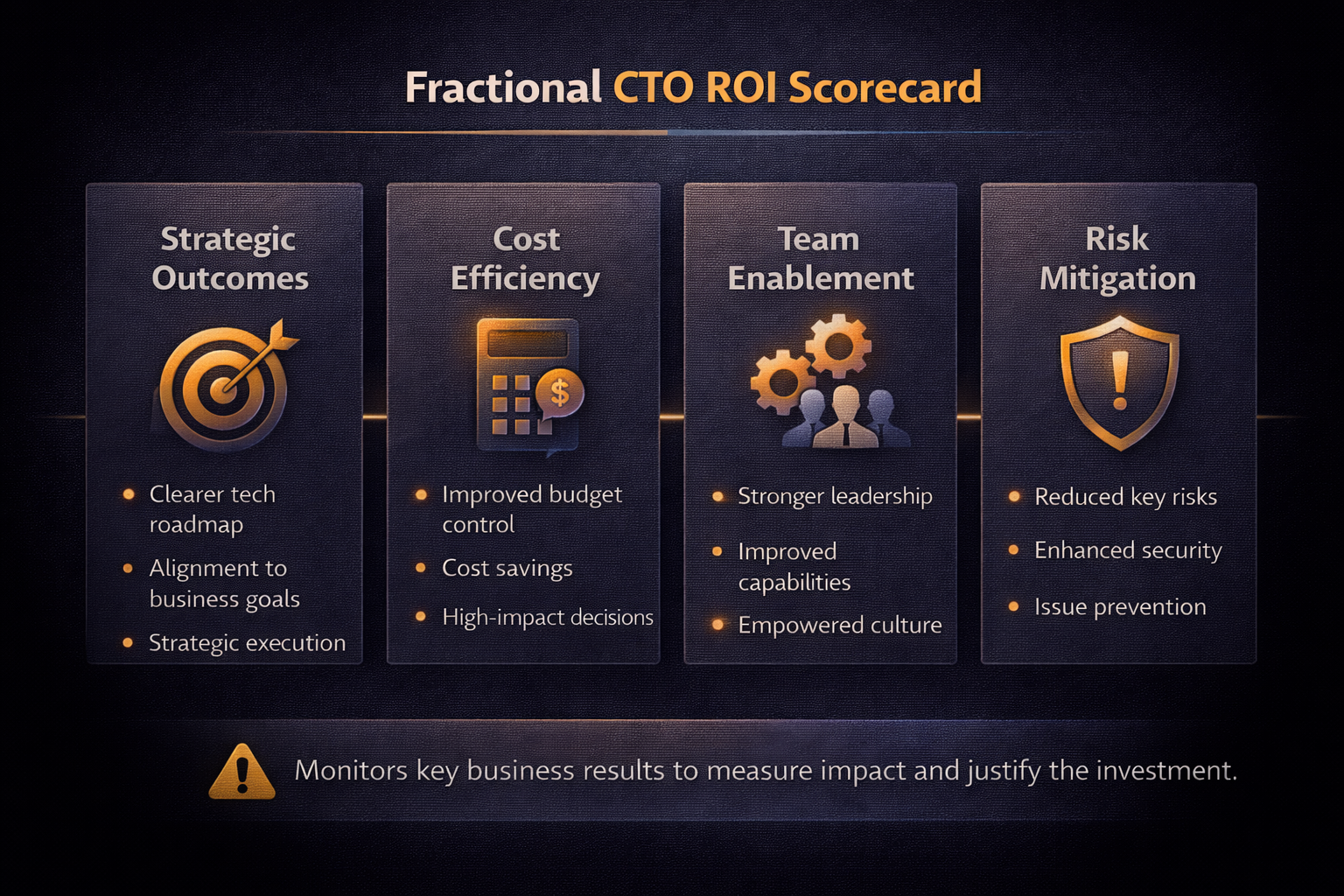
Executives need simple signals. If the engagement is working, you should see measurable improvement across a few practical areas. The goal is better outcomes and better decisions, not vanity dashboards.
- Speed. Shorter decision cycles and fewer escalations.
- Predictability. More reliable delivery commitments.
- Risk. Fewer unresolved issues and clearer security ownership.
- Cost. Reduced tool sprawl and stronger vendor value discipline.
- Clarity. Fewer initiatives, sharper priorities, and more explicit ownership.
How to choose the right fractional CTO
You are hiring leadership. Look for executive judgment, operating discipline, and the ability to drive outcomes across teams and business functions.
- Proven experience leading delivery across growth, change, or modernization.
- Clear communication with executives and teams.
- Comfort making tradeoffs under time, budget, and risk constraints.
- Ability to improve systems and people at the same time.
- A bias toward action, not presentation volume.
Common pitfalls and how to avoid them
- Unclear scope. Define outcomes, cadence, and deliverables in writing.
- Shared decision rights. Name one owner for each outcome and escalation path.
- Too many initiatives. Force stop decisions every month to protect focus.
- Tool-first thinking. Approve outcomes and operating constraints before selecting tools.
Quick answers for leaders evaluating fractional CTO support
- Use it when leadership bandwidth is the bottleneck. The model works best when teams need senior direction and sharper decisions now.
- Demand a visible first month. The engagement should produce priorities, owners, stop decisions, and a working cadence quickly.
- Choose the model that matches the problem. Advisory, delivery acceleration, and interim bridge work solve different leadership gaps.
- Measure business traction, not activity. Strong engagements improve decision speed, execution quality, and risk control.
Frequently Asked Questions
When should a leader use fractional CTO support?
Fractional CTO support fits when leadership bandwidth limits delivery, technical debt blocks progress, decision quality is slipping, or the business needs senior technology leadership before hiring a full time CTO.
What should happen in the first 30 days of a fractional CTO engagement?
The first 30 days should produce a focused assessment, clear risks, named owners, stop decisions, and a practical execution plan with a governance cadence leaders run.
What engagement models work best for fractional CTO support?
Common models include advisory leadership support, delivery acceleration and modernization, and interim CTO coverage during transition or hiring.
How should leaders measure ROI from fractional CTO support?
Track decision speed, delivery predictability, risk reduction, cost control, and clarity of priorities.
What mistakes cause fractional CTO engagements to fail?
Vague scope, shared decision ownership, too many initiatives, and tool first thinking.
Need fractional CTO support without the hiring delay
If priorities are clear but execution is not, a working session will surface the risks, constraints, and next 30 day plan leadership runs immediately.
Book a consultation