
Why accountability breaks down in technology teams
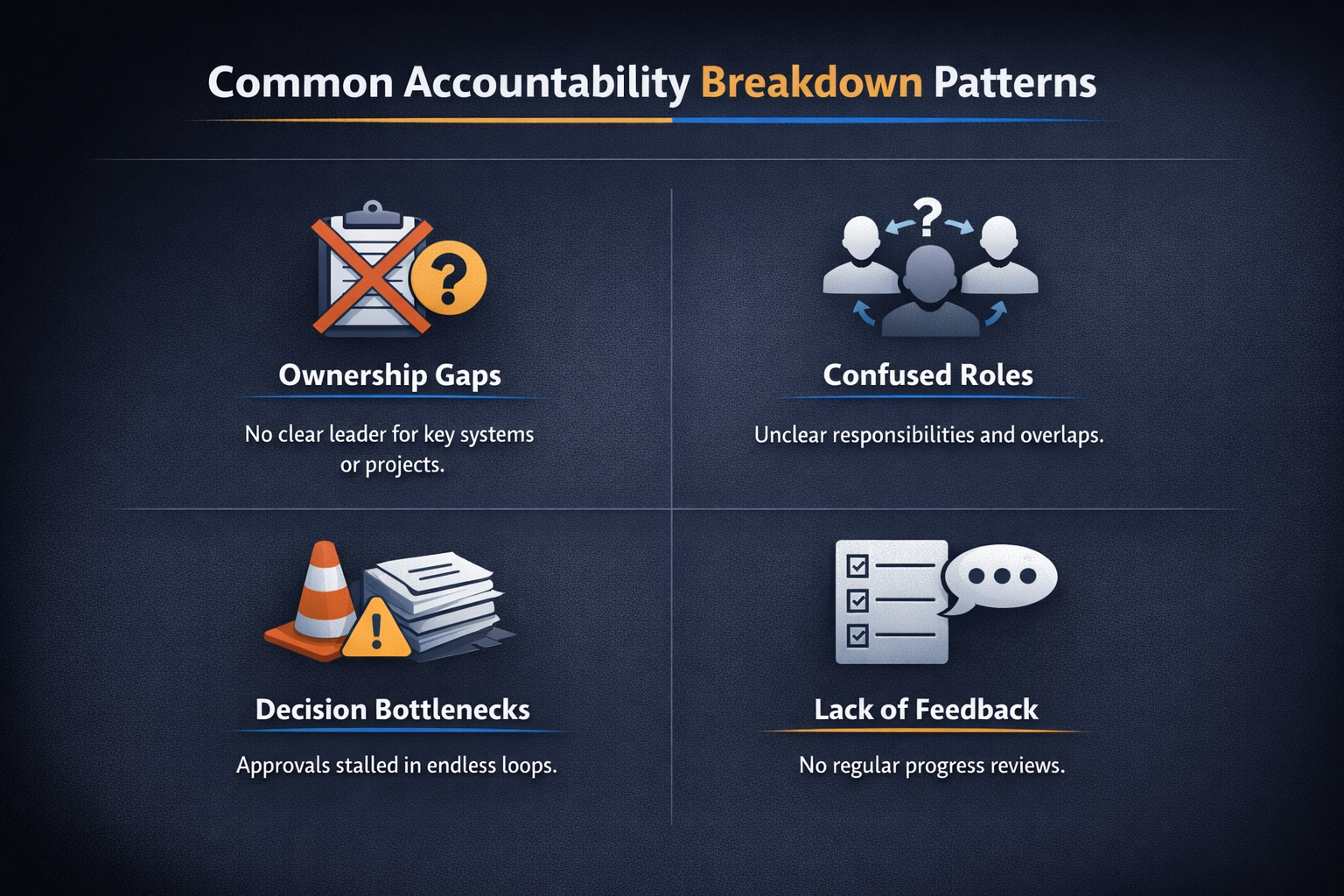
Most accountability failures do not come from poor intent or lack of effort. They emerge from organizational design choices that dilute ownership.
As teams scale, leaders often spread responsibility to be inclusive. Decisions move to committees. Ownership becomes shared. Authority becomes implied rather than explicit.
The result is predictable. Work slows. Escalations rise. Teams wait for alignment that never fully arrives.
- Outcomes have many contributors but no single accountable owner.
- Decision paths are unclear until issues become urgent.
- Escalations happen late because nobody is sure who decides.
- Strong performers spend time coordinating ambiguity instead of driving results.
The hidden costs of unclear ownership
When accountability is vague, leaders pay in ways that are easy to miss at first. The organization does not stop moving. It becomes slower, noisier, and harder to trust.
- Decisions require more meetings.
- Delivery teams hedge rather than commit.
- Issues escalate late instead of early.
- Strong performers disengage.
Accountability is a system, not a slogan
Telling teams to be accountable does not create accountability. Systems do.
Effective accountability requires three elements working together. Ownership. Authority. Measurement. Remove any one of them and the system fails.
Element 1. Clear ownership
Ownership means one person is accountable for the outcome. Not the task. Not the effort. The result.
- One owner per outcome.
- Ownership documented and visible.
- Ownership reviewed when priorities change.
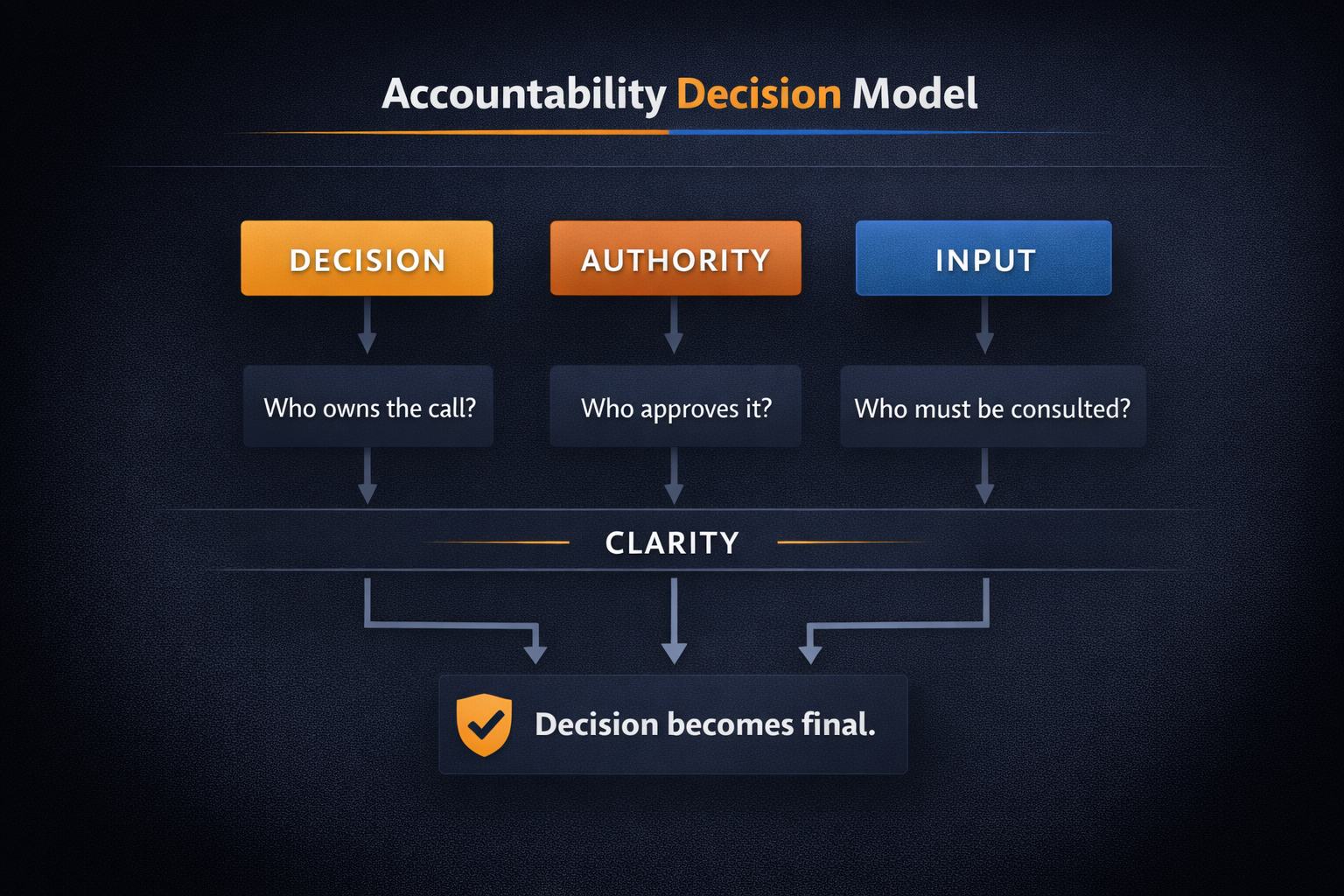
Element 2. Decision authority
Owners must have the authority to make decisions. Without authority, ownership becomes symbolic.
- Clear decision rights.
- Escalation paths defined in advance.
- Leaders back owners publicly.
Element 3. Measurable outcomes
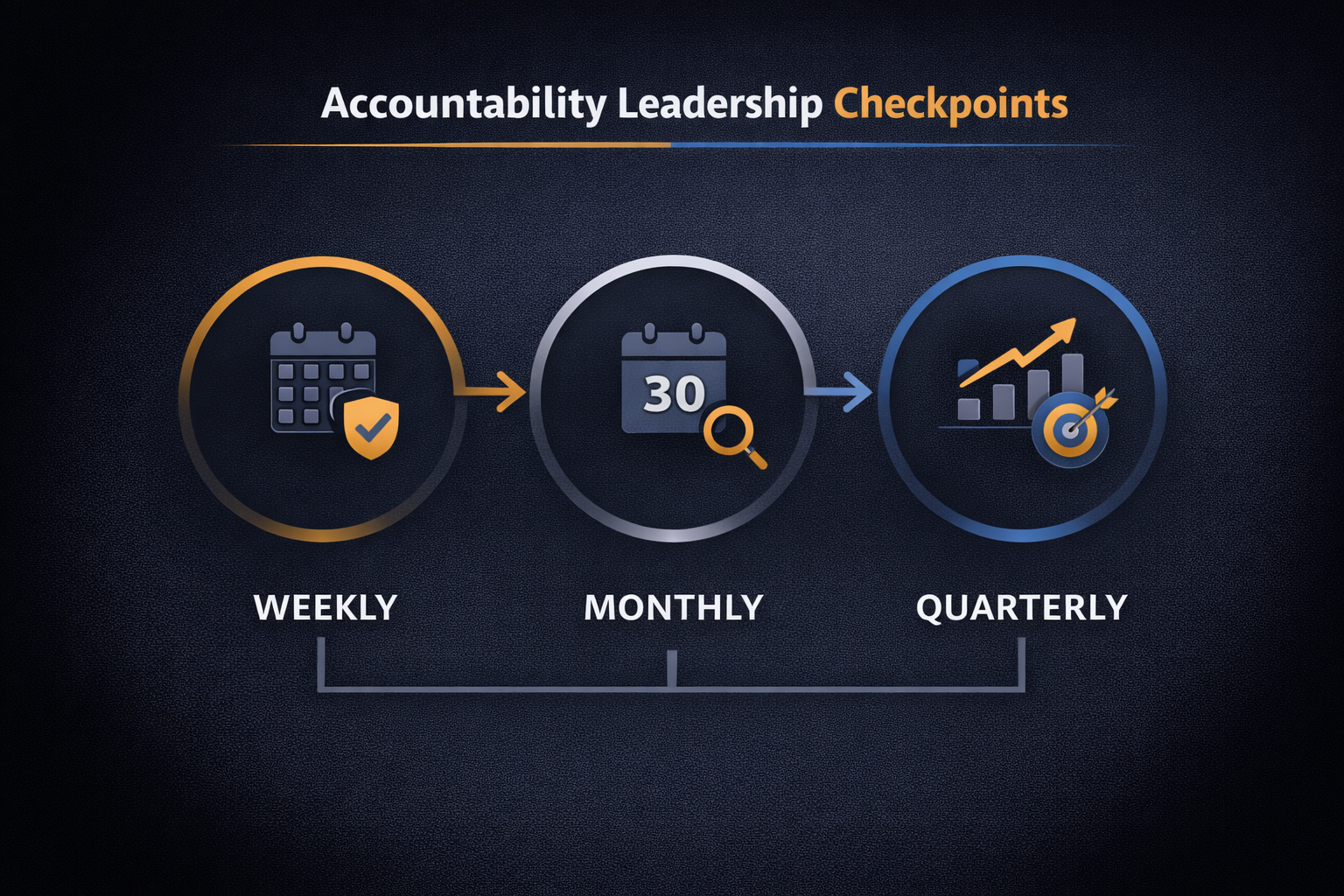
Measurement closes the loop. If outcomes are not measured, accountability fades over time.
- Outcomes defined in business terms.
- Leading indicators reviewed weekly.
- Results reviewed monthly.
How leaders reinforce accountability
Accountability is reinforced through consistent leadership behavior. What leaders ask, track, approve, and tolerate becomes the operating standard teams follow.
- Ask who owns the outcome.
- Ask what decision was made.
- Ask how success will be measured.
- Stop rescuing unclear ownership.
What strong accountability looks like in practice
- Faster decisions with fewer meetings.
- Clear ownership across platforms and services.
- Earlier issue detection.
- Higher team trust.
First 30 days to tighten accountability
Days 1 to 10
- List the highest-value outcomes and current owners.
- Identify outcomes with shared ownership or unclear authority.
- Document where decisions slow down most often.
Days 11 to 20
- Publish clear ownership for the most important outcomes.
- Define decision rights and escalation rules.
- Choose leading indicators for weekly review.
Days 21 to 30
- Run three weekly accountability reviews.
- Track which actions closed and which ones rolled forward.
- Reset ownership where the model still feels vague or symbolic.
Executive diagnostic
Use these questions when accountability feels unclear, delivery slows, or teams keep escalating issues that should already have owners.
- Which outcomes matter most right now.
- Who owns each outcome by name.
- Does each owner have authority to make the decisions required.
- What leading indicators show whether progress is improving or drifting.
- Where are actions rolling forward without closure.
Quick answers for leaders building accountability
- Accountability is not consensus. It requires one clear owner for each outcome.
- Authority matters as much as ownership. People cannot be accountable for results they cannot shape.
- Measurement keeps accountability real. Weekly indicators and monthly outcomes prevent drift.
- Leadership behavior sustains the system. What leaders ask and tolerate determines what teams reinforce.
Frequently Asked Questions
What creates accountability across technology teams?
Accountability comes from one owner per outcome, clear decision rights, visible measures, and a review cadence that tracks progress and action closure.
What breaks accountability most often?
Shared ownership, vague authority, unclear outcomes, and weak escalation paths are the most common reasons accountability breaks down.
How do leaders reinforce accountability without micromanaging?
Leaders reinforce accountability by asking who owns the outcome, what decision was made, how success is measured, and whether actions are closing on schedule.
Why does ownership without authority fail?
Ownership without authority creates symbolic accountability. The named owner becomes responsible for the result but lacks the ability to make the decisions needed to achieve it.
What improves once accountability is clear?
Decision speed improves, escalation volume drops, issues surface earlier, and teams gain more trust because expectations and responsibilities are clearer.
Want accountability without slowing delivery
Bring one priority initiative and your current org view. We will define owners, decision rights, and a simple measurement cadence so teams move faster with less escalation.
Book a consultation