
Why leaders overengineer strategy
Most overengineering starts with a good intent. Leaders want to avoid rework. They want to build for growth. They want to protect the brand. They want teams to move faster later.
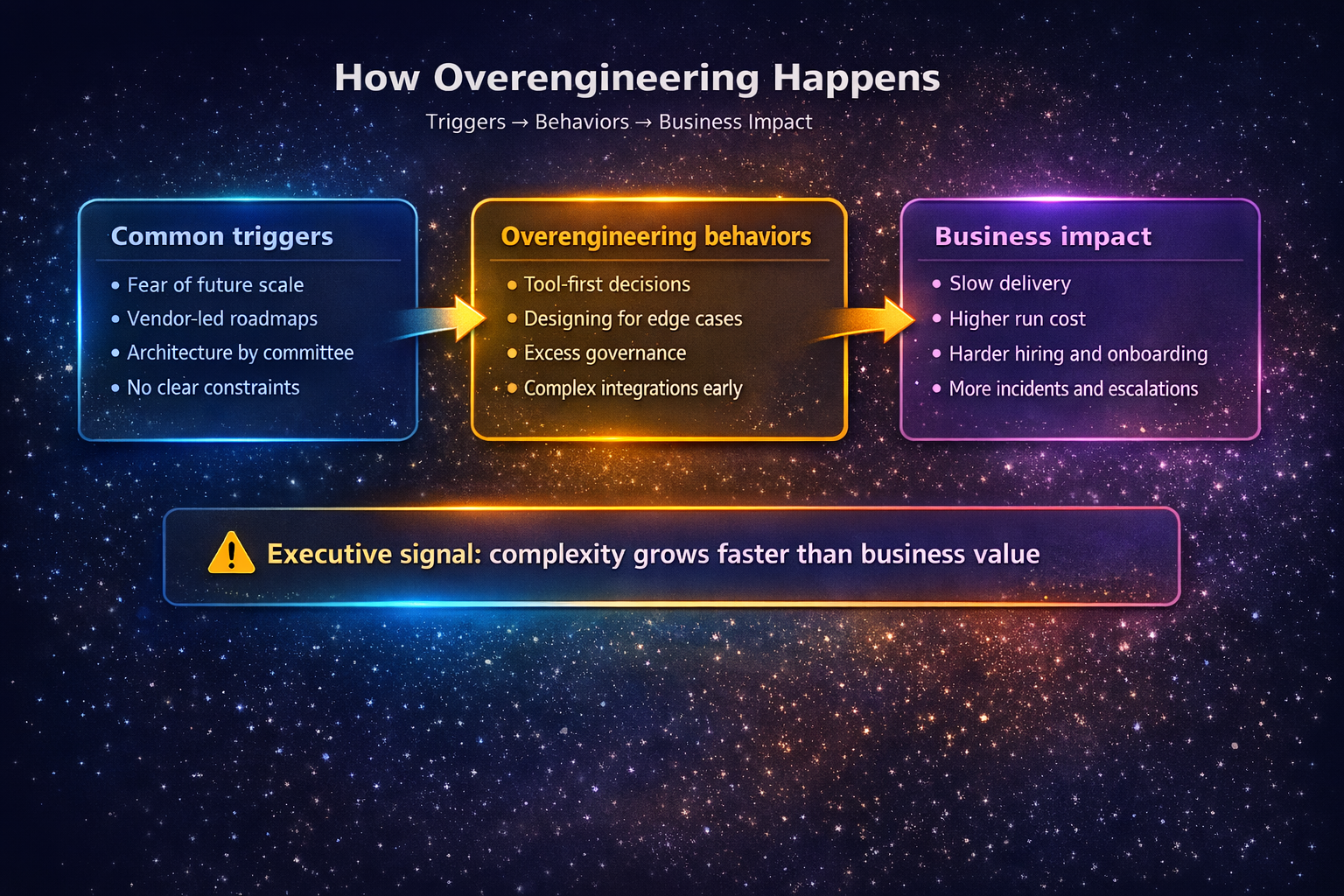
The issue is timing. Leaders often plan for a future state that is not real yet. The organization then pays for complexity today. It pays in slower delivery, more coordination, and higher run cost.
Overengineering also hides inside language. Teams use words like platform, enterprise, target state, and modernization program. Those words sound responsible. They also create permission to add scope without proving value.
What overengineering looks like in practice
Overengineering is not one big mistake. It is a series of small decisions that stack. Each decision adds a dependency. Each dependency adds coordination. The work slows down, even when teams work harder.
Watch for these patterns.
- Teams design for edge cases before they ship the core flow.
- Leaders approve tool purchases without a measurable outcome.
- Architecture becomes a substitute for decisions.
- Governance expands before delivery proves stable.
- Teams build integrations for systems that will be replaced.
The real cost is leadership bandwidth
Complex systems demand more leadership attention. Meetings grow. Reviews multiply. Approvals slow down. Work moves through more hands, which raises the chance of rework and misalignment.
Teams also lose trust. When delivery feels slow, leaders push for more plans. When plans grow, delivery slows further. This loop creates frustration on both sides.
If you want one simple test, use this question. Does the strategy reduce decision load over time. If strategy adds decision load, it is moving in the wrong direction.
A practical strategy decision model
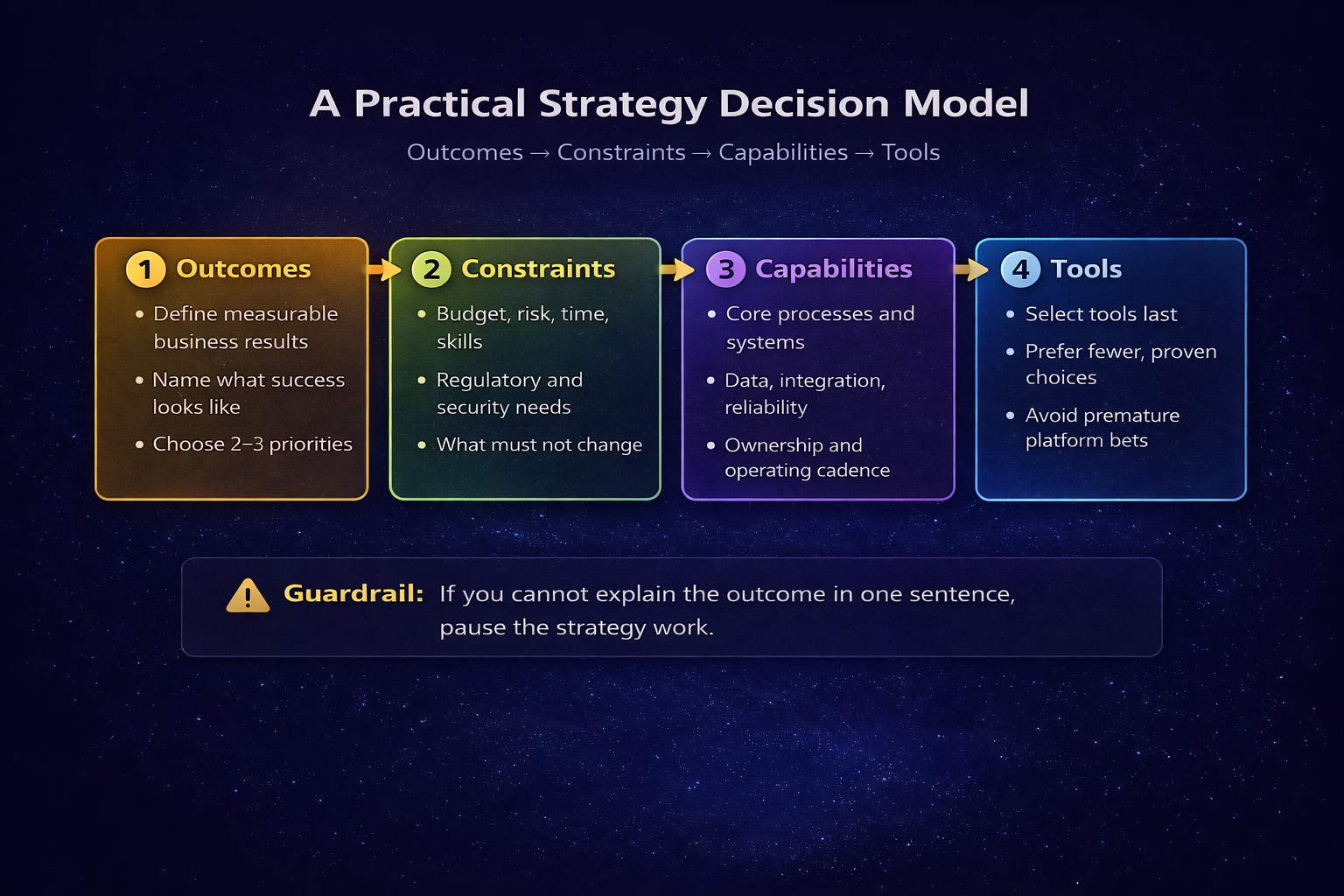
Leaders need a way to decide without falling into tool debates. The model below keeps strategy grounded in business reality. It also reduces the chance of expensive pivots.
Use this order every time.
Step 1. Define outcomes
Outcomes must be measurable. They must link to business performance, customer experience, or risk reduction. Keep the list short. Most teams stall when the strategy tries to solve everything.
- Pick two or three outcomes for the next 6 to 12 months.
- Define what changes in metrics, cost, time, or reliability.
- Write one sentence per outcome. If the sentence does not fit, refine it.
Step 2. Name constraints
Constraints protect the business. They also protect the team. A strategy without constraints turns into a wish list.
- Budget. What range is real.
- Risk. What level is acceptable.
- Time. What deadlines matter and why.
- Talent. What skills exist in house today.
- Reliability. What uptime the business needs.
Step 3. Choose capabilities to build
Capabilities describe what the organization must do well. They are not vendor names. They are not products. They are repeatable strengths.
- Reliable integration between systems.
- Clean data ownership and governance.
- Stable release and incident response rhythm.
- Clear intake and prioritization process.
This step is where many strategies fail. Teams jump from outcomes to tools. They skip capability design. They then buy tools that do not fit the operating model.
Step 4. Select tools last
Tools matter. Timing matters more. Choose tools after you define the work and the ownership model. This protects you from tool sprawl and vendor lock in.
- Prefer fewer tools with strong adoption.
- Demand proof in a limited pilot.
- Keep exit paths realistic.
Leadership checkpoints to keep strategy clean
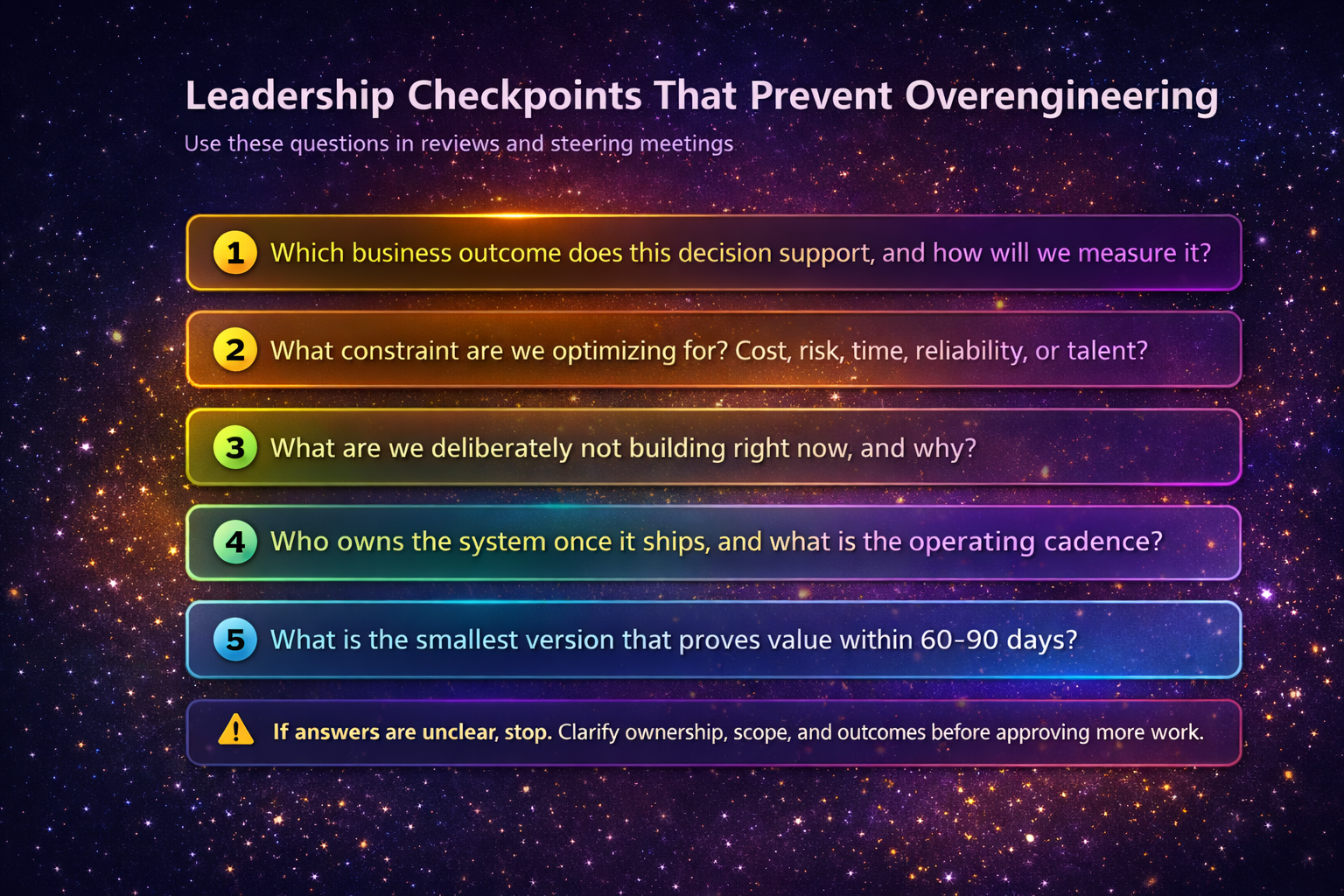
Strategy stays practical when leaders use consistent checkpoints. These questions turn fuzzy debates into clear decisions. Use them in steering meetings, reviews, and budget discussions.
What to stop doing right now
Most organizations do not need more planning. They need fewer decisions and cleaner ownership. These changes create space for execution.
- Stop funding projects with no measurable outcome.
- Stop building integrations for systems scheduled for retirement.
- Stop adding governance layers before delivery stabilizes.
- Stop rewarding plans more than shipped results.
What success looks like in 90 days
Strategy should improve execution quickly. You should see visible shifts within one quarter. If you do not, the strategy work needs a reset.
- Fewer active initiatives, with clearer priority.
- Shorter decision cycles, with fewer meetings.
- Higher delivery predictability across teams.
- Lower run cost from reduced tool sprawl.
- Clear ownership for platforms, data, and vendors.
Want a strategy that drives execution
If your roadmap feels heavy, your teams are stuck in planning, or vendors keep steering decisions, a short working session will surface the constraints, the real priorities, and the first 30-day execution plan.
Book a consultation